
Using HSA or FSA for Dental Implants
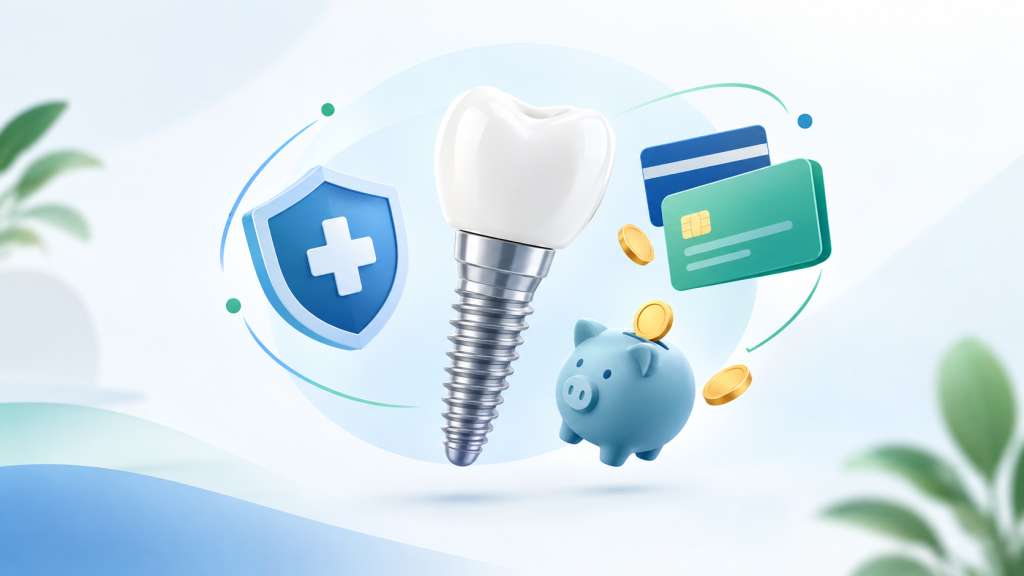
Here’s a question worth asking before you pay for an implant out of your checking account: is there money sitting in an HSA or FSA that could have covered this instead, tax-free? For a surprising number of patients, the answer is yes, and they simply never connected the dots. These accounts weren’t built with implants specifically in mind, but implants happen to fit the IRS rulebook about as well as any dental procedure can.
Below is what actually counts, how an HSA and an FSA diverge once real treatment dollars are involved, and where the 2026 limits land against a typical case.
Quick Answer
A dental implant that replaces a missing tooth and restores normal chewing function is a qualified medical expense under IRS rules, so HSA and FSA dollars can be used to pay for it. That includes the abutment, the crown, and any bone graft or sinus lift tied to the same treatment. The one real carve-out involves placing an implant where a tooth was already fine, done solely to change its appearance, and that scenario almost never comes up in actual practice.
The IRS Rule Behind All of This
Both HSA and FSA eligibility trace back to one document: IRS Publication 502, Medical and Dental Expenses. It defines a qualifying expense as money spent to diagnose, treat, cure, or prevent a disease, or to affect the structure or function of the body in a meaningful way. Dental treatment falls under that umbrella generally, and the publication goes a step further by naming “Artificial Teeth” as its own specific line item among covered expenses. An implant checks every part of that test at once. It replaces a lost root, restores something you can no longer do on your own, and addresses a real condition rather than polishing something that already worked.
The publication is just as direct about what falls outside the rule. Teeth whitening is the example it names explicitly as excluded, purely because it’s cosmetic with no functional benefit. The same logic would catch an implant placed over a perfectly healthy tooth for looks alone, but that’s a rare scenario. In nearly every case that reaches a dental chair, the tooth in question is already gone or already breaking down, so the treatment lands comfortably inside what qualifies, with little room for argument.
What’s Bundled Into “the Implant” for Tax Purposes
The IRS doesn’t isolate the titanium post and judge it on its own. It looks at the treatment as a whole, so the components that typically travel together in a real case usually qualify as a set:
- Placement surgery for the implant fixture itself
- The abutment and the finished crown
- A bone graft or sinus lift, provided it’s performed to get the site ready for the implant
- Diagnostic imaging such as a CBCT scan, and sedation connected to the procedure
- Consultations and follow-up appointments tied to that same plan
Should one part of your treatment serve no real functional role, purely decorative work that has nothing to do with chewing or dental health, it’s smart to check that specific item with your administrator instead of assuming it’s automatically bundled in.
HSA and FSA Work on Different Clocks
People tend to use these two names interchangeably, which causes real confusion once an implant is involved. An HSA only exists if you’re enrolled in a qualifying high-deductible health plan, but once funded, that money is permanent. Nothing in it expires, and it follows you through a job change or into retirement without issue. An FSA, by contrast, is tied directly to your employer, and the default rule resets your balance to zero at the end of the plan year. A handful of employers ease that rule with either a modest carryover or a brief grace period, though a single plan will never combine the two.
For 2026, the HSA contribution ceiling sits at $4,400 for individual coverage and $8,750 for family coverage. An FSA caps out at $3,400, with up to $680 allowed to roll into the next plan year if your employer’s plan includes that option. A treatment plan that crosses a calendar year-end deserves real attention to these numbers, particularly the FSA’s much harder deadline, rather than finding out the hard way in January.
Running These Numbers Against an Actual Treatment Cost
A single implant, post through crown, commonly runs $3,000 to $6,000, a figure covered in more depth in our dental implants cost guide. Someone contributing the full 2026 individual HSA limit could realistically fund a single implant from that year’s deposits alone, assuming no other medical costs compete for the same balance. On the family side, the $8,750 ceiling leaves enough breathing room for treatment beyond a single tooth. An FSA’s $3,400 cap handles a meaningful share of a single-tooth case but typically isn’t enough on its own for a full-arch treatment plan, which is usually where financing steps in to cover the difference.
One Tax Benefit, Not Two
This is where patients most often get tripped up. Once you’ve paid for an implant with HSA or FSA money, you’ve already captured the tax advantage, since those dollars never touched income tax in the first place. That same expense can’t also be claimed as an itemized medical deduction on Schedule A. Only money paid directly out of pocket, with no HSA, FSA, or insurance reimbursement behind it, counts toward that separate deduction, and even then only once your total medical costs climb past 7.5 percent of what you reported as adjusted gross income. For the typical HSA or FSA user, the pre-tax payment is the entire tax benefit, not an opening move toward a bigger write-off later.
Getting the Money Out the Door
Most HSA and FSA plans issue a debit card that your dental office can run directly, which is by far the simplest way to pay. If a card isn’t part of your plan, you front the payment yourself, then file for reimbursement once you’ve got the receipt in hand. Either route, keep an itemized invoice from the practice on file, showing the procedure and the date, in case your administrator asks for proof during a claim review. A formal Letter of Medical Necessity isn’t typically required for routine implant treatment, unlike certain other procedures, but it’s worth a quick call to your plan if your case has anything unusual about it.
If the Account Doesn’t Stretch Far Enough
An HSA or FSA covering part of an implant case without covering all of it is the norm rather than the exception, especially once a full arch enters the picture. Our dental implant financing calculator and dental implant insurance calculator can help map out how HSA or FSA dollars combine with financing or an existing insurance benefit, so the remaining gap isn’t a guess.
Frequently Asked Questions
Is a Letter of Medical Necessity required to use HSA or FSA funds for an implant?
Not typically for standard implant treatment, since it already sits under dental treatment in IRS Publication 502. Confirm with your specific administrator if there’s anything atypical about your case.
Does a bone graft or sinus lift performed ahead of my implant also qualify?
Yes, provided it’s done to prepare for the implant placement itself, it falls under the same qualifying rule.
What happens to leftover FSA funds once the plan year ends?
They’re generally forfeited, unless your employer’s plan allows a limited carryover or a short grace period, which function as alternatives to one another rather than both at once. Check your plan’s specific terms before year-end arrives.
Can older HSA contributions still pay for a new implant today?
Yes. HSA balances never expire, so money contributed in prior years remains fully usable whenever treatment happens.
If HSA or FSA funds cover my implant, can I still deduct it on my tax return?
No. Any amount already paid through pre-tax HSA or FSA dollars is off the table for an itemized deduction. Only genuinely out-of-pocket, unreimbursed costs count toward that separate 7.5 percent AGI threshold.
Do these accounts extend to a spouse’s or a dependent’s implant treatment?
In most cases yes, HSA and FSA funds generally cover qualifying expenses for a spouse and tax dependents, not only the account holder.
The Bottom Line
An HSA or FSA remains one of the more underused ways to bring down the real cost of a dental implant, simply because the money inside never faced income tax to begin with. Confirm which account type you actually have, know its specific rollover and contribution rules, and keep documentation ready so a claim never stalls. Whatever these accounts leave uncovered, our dental implants cost calculator can help you plan for the rest.
Sources: IRS, Publication 502, Medical and Dental Expenses · 2026 HSA and FSA contribution limits, IRS Revenue Procedure 2025-32, as reported by WEX Inc. and Newfront